How Russia is Working Together with China
A look at How Russia is Working Together with China to battle the dollar and a look at one of the world's largest economies and what to expect.
by Equedia9 minute read
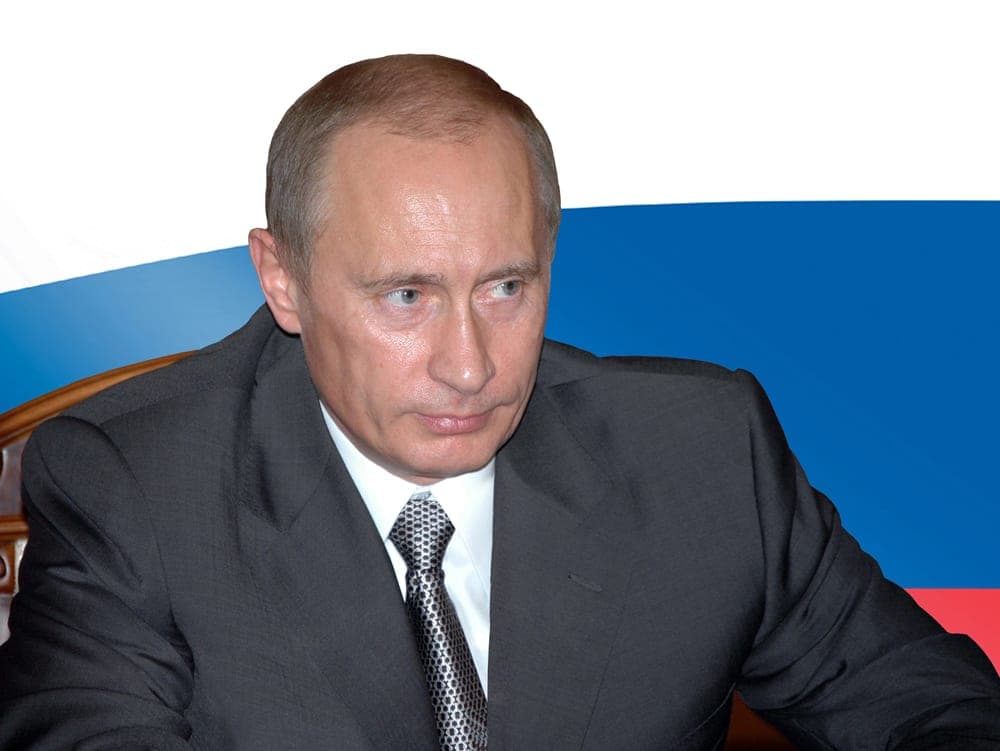
How Russia is Working Together with China and a Look at One of the World’s Largest Economies
Dear Readers,
Stocks are falling and all of a sudden every one is confused.
But as I mentioned in a past letter, while I was confident from 2009-2013, this would be the year I start pulling back.
The S&P is now down 4% for the year. The Nasdaq hit 4,000 for the first time in over 2 months and made its lowest close in 4 months, marking the exchange’s worst week since June 2012.
While this “correction” appears to be a minor blip when looking at it from a five year horizon, the combination of political and fiscal events around the world weigh far too heavy to make a worthy guess on the direction of the market.
From computer programs to mass currency manipulation, the world is mired in events beyond our prediction. The world is screaming deflation, yet the trillions of Federal Reserve notes released from an unaudited private bank account are flooding the economy in an attempt to create inflation.
This battle between real economics and artificial demand has resulted in a market held up by a very thin thread.
And this is before we even get into the discussion of currency and political wars.
The World’s Third Largest Economy
All eyes are on Ukraine, yet the problems in the world’s third largest economy, Japan, continues to grow.
Japan is a nation with a stagnating economy, a deficit over 9% of GDP, and an expected public debt this year of 242 percent of GDP.
Over the next 20 years, Japan’s work force is expected to fall from 70% to 55%, while those over 65 already represent more than 20% of its population.
Sales of adult diapers already exceed those made for babies.
Japan will have a record budget this year. As a result, it raised taxes last year for consumption and for corporations, alongside record monetary stimulus.
Despite raising taxes, new bond issuance will cover 43 percent of the state’s revenue.
But that’s just the tipping point.
Outstanding government bonds are forecast to total ¥780 trillion at the end of March 2015 – that’s equal to more than 15 years‘ worth of this year’s expected (and increased) fiscal tax revenue.
It’s no surprise that regardless of slightly improved economic pace (as estimated by its Central Bank) and corporate earnings, the Nikkei tumbled to six-month lows on Friday while posting its biggest weekly fall since the March 2011 tsunami and nuclear disaster.
Within the broader Topix index, Japanese bank stocks have just hit a bear market (down over 20% from their highs) at 10-months.
As Japanese stocks continue to fall, so will its economic growth.
Japan’s central bank has promised 2% inflation within the next year and it hasn’t come close to that.
The record amount of stimulus combined with low interest rates clearly hasn’t been able to bring Japan any closer to growth.
Since the Bank of Japan (BOJ) Governor Haruhiko Kuroda has promised that the loose monetary policy will remain for as long as needed, we’re likely to see further stimulus in the coming months from Japan; this is in addition to the insane record amount of stimulus already in place.
To back this theory, sources say that Japanese Prime Minister Shinzo Abe recently told people close to him that he is planning to see the Bank of Japan Gov. Haruhiko Kuroda this month to discuss monetary policy. Specifically, he is expected to encourage the BOJ to expand its monetary easing program due to the headwinds caused by the tax rate hike from last year.
As you may recall from many of my previous newsletters, such as Currency in a Financial War, when one central bank prints, others do too in order to keep balance. So when the central bank of the world’s third largest economy prints, others will likely follow suit.
Do you think Japan will Collapse?
CLICK HERE to Share Your Thoughts
Nuclear Energy Support
It has taken a lot more time for demand fundamentals to exceed supply in this space, but things continue to change in favour of nuclear.
Japan cannot afford high-energy costs – especially given its economic stagnation. The country has ramped up imports of oil and gas to compensate for the loss of its nuclear power capacity following the 2011 nuclear accident, but this has come at significant costs.
High-energy prices are one of the biggest hindrances of growth for any economy. As Japan continues to devalue its currency to stimulate the economy by encouraging exports, which it has done for the last 18 months, the inflated costs of imports have shut down any benefit of rising exports.
Japanese exports have not kept pace with the inflated costs of imports.
That’s why this Friday Prime Minister Abe and his Cabinet announced under a new energy policy that atomic generation would resume once regulators had deemed the country’s reactors safe, reversing a plan put in place by the previous administration.
Bringing the plants back online may be a slow process, but Japan needs ~~cheaper energy~~ nuclear energy to survive. However, many of the power plants will have to undergo serious and expensive transformation to bring safety measures up, which means the new energy policy may not be immediately reflected in the uranium market.
But given that I highly expect further stimulus, I expect that some of that money will find its way toward the expensive transformation that many of the power plants will need to undergo.
I like the uranium sector, despite the negativity surrounding it.
That’s why I continue to like Uranerz Energy (TSX: URZ)(NYSE MKT: URZ), despite it being nearly up 90% over the past five months.
If you haven’t read my report on Uranerz, you can find it here:
[CLICK HERE TO READ REPORT](http://www.equedia.com/an-explosive-opportunity-in-uranium-and-uranerz-energy-corporation/ "An Explosive Opportunity in Uranium and Uranerz Energy Corporation")
Dollar Losing Status?
Just last week, via the South China Morning Post, Standered Chartered’s global head of central banks and sovereign wealth funds,Jukka Pihlman, said that at least 40 central banks have invested in the yuan and several others are preparing to do so, putting the mainland currency on the path to reserve status even before full convertibility:
“The US dollar is still the world’s most widely held reserve currency, accounting for nearly 33 per cent of global foreign exchange holdings at the end of last year, according to IMF data. That ratio has been declining since 2000, when 55 per cent of the world’s reserves were denominated in US dollars.
…The IMF does not disclose the percentage of reserves held in yuan, but the emerging market countries’ share of reserves in “other currencies” has increased by almost 400 per cent since 2003, while that of developed nations grew 200 per cent, according to IMF data.
Pihlman said “a great number of central banks are in the process of adding \
“The \
The central banks more likely to add yuan holdings in the future were the ones with “strong trade linkages to China” and those which had relatively large levels of reserves which could consider diversifying more for return-related reasons, he said.”
Guess who has been aggressively developing these “strong trade linkages” to China?
That’s right, Russia.
The Russian Muscle Flex
I’ve repeatedly stated that Russia and China will be the main driver for the decline of the dollar as the world’s only reserve currency.
Russia has just made it clear to the West that it won’t tolerate being bullied and has now warned European leaders that it would cut natural gas supplies to Ukraine if it did not pay its bills, which could lead to a reduction of onward deliveries to Europe.
In a letter to European leaders, Putin Stated:
“…Gazprom is compelled to switch over to advance payment for gas deliveries and, in the event of further violation of the conditions of payment, will completely or partially cease gas deliveries.
…Undoubtedly, this is an extreme measure. We fully realise that this increases the risk of (Ukraine) siphoning off natural gaspassing through Ukraine’s territory and heading to European consumers. We also realize that this may make it difficult for Ukraine to accumulate sufficient gas reserves for use in the autumn and winter period. In order to guarantee uninterrupted transit, it will be necessary, in the nearest future, to supply 11.5 billion cubic meters of gas that will be pumped into Ukraine’s underground storage facilities, and this will require a payment of about 5 billion US dollars.
However, the fact that our European partners have unilaterally withdrawn from the concerted efforts to resolve the Ukrainian crisis, and even from holding consultations with the Russian side, leaves Russia no alternative.”
I mentioned many times before that Russia would use energy and potentially cut off supplies to show the world its power. It’s happening now.
Furthermore, the letter from Putin states a very clear and concise point that it’s Russia’s way or the highway:
“There can be only one way out of the situation that has developed.
We believe it is vital to hold, without delay, consultations at the level of ministers of economics, finances and energy in order to work out concerted actions to stabilize Ukraine’s economy and to ensure delivery and transit of Russian natural gas in accordance with the terms and conditions set down in the contract. We must lose no time in beginning to coordinate concrete steps. It is towards this end that we appeal to our European partners.
It goes without saying that Russia is prepared to participate in the effort to stabilize and restore Ukraine’s economy. However, not in a unilateral way, but on equal conditions with our European partners. It is also essential to take into account the actual investments, contributions and expenditures that Russia has shouldered by itself alone for such a long time in supporting Ukraine. As we see it, only such an approach would be fair and balanced, and only such an approach can lead to success.”
Note the repetitive use of the word “only.”
Meanwhile Germany’s economic and energy minister and vice chancellor, Sigmar Gabriel, has already said there is “no sensible alternative” to Russian natural gas imports and it was unlikely Russiawould stop deliveries because of the crisis over Ukraine, stating, “Even in the darkest hours of the Cold War Russia respected its contracts.”
While America encourages others nations in helping Ukraine, it delays its funding to Ukraine on conditions of gas trade talks as I mentioned in my letter, “ Will America Save Europe?” That means, as it stands, Russia is the only country helping Ukraine’s economy with energy supplies that are not paid for.
It would be interesting to see what America does next, but it would appear that whatever it is – sanctions, etc. – it may not be enough to thwart the plans of Putin.
Is America Winning the Battle Against Russia, or is Putin Getting His Way?
Russia to Market Yuan Bonds?
Putin is not only securing a major gas deal between Russia and China, but he is also enticing the world into trade outside of the Dollar.
In the most direct slap in the face to America, Russia’s Gazprom has announced that it is considering a “symbolic” bond issue marketed in China’s currency, the Yuan.
That means that energy giant Gazprom will not only be delivering gas to China through China Gazprom settled in Yuan (convertible into Russian Ruble), but also increasingly funding itself in Yuan.
Oh, and Russia is already buying Chinese goods and services in Yuan, which again, are convertible into Russian Rubles.
President Obama is fast realizing that he is now in a position where there really is nothing he can do at this point – at least not directly – to stop Putin’s forward momentum. He has tried sanctions and that didn’t work.
Perhaps it would be best now to re-focus on Syria?
More Gas Attacks in Syria?
According to the
And so the saga continues…