Against the Grain: The Unseen War on Food
The fog of war obscures many things. When it lifts, there will be a collective realization that the term “bread lines” may be making an unwelcome comeback.
by Equedia3 minute read
There is a common saying that we have all come to know:
“You can’t see the forest for the trees.”
Here is a definition that helps to explain it better:
“When one can not understand or appreciate a larger situation, problem, etc., because one is considering only a few parts of it.”
This exactly mirrors the current situation in Ukraine. There isn’t a very clear definition of what will happen next. Confusion and uncertainty result in a very unsettling feeling that something worse may be just around the next corner.
We can all see what is happening now.
Loss of life, destruction of property, dislocation of people and of family units, and the many other forms of human suffering that war brings with it.
In the background, there is another form of suffering that will soon impact the lives of 140 million people, according to Arif Husain, the Chief Economist for the UN World Food Programme. Hunger.
Basic needs include food, water, and shelter. Lately, that list has also come to include the air we breathe. Our focus is not dirty water, unclean air, or inadequate shelter. For today, we only want to look more closely at food.
Ukrainian farmers have been asked to trade in their farm tools for rifles. As a result, they have abandoned their empty and unplanted wheat fields. These actions have created a very big problem lurking in the future.
In our history lessons, we learned that Ukraine is the “Bread Basket of Europe .”Every year it is refilled with a new harvest. That is every year until now.
Inputs for wheat crop production include seeds, diesel fuel, and labor. All are in short supply or, in a practical sense, unavailable. The impact of an “empty wheat harvest” for Ukraine will put price pressure on other areas of the world that are far removed from the Russia/Ukraine conflict.
Countries like Canada and Australia will be affected.
There will be uncontrollable increases in prices for wheat as excess demand will swamp limited supply. This supply problem is real.
Removing Ukrainian wheat production from global markets will create other problems. One example is that the limited supply of wheat coming from Canada or Australia will have to travel greater distances to get to end-users in Europe and Asia.
This means it will cost more, on top of what is already expected to be a record high price. A bad situation made worse.
I know of a baker who told me that his cost of specialty flour went up from around $60 per bag to well over $100. And guess what? This was before Russia’s actions in Ukraine.
It has been suggested that even if hostilities stopped immediately, it is unlikely that Ukraine could get their “wheat in the ground” in time so that the age-old timetable of plant, grow, and harvest is met.
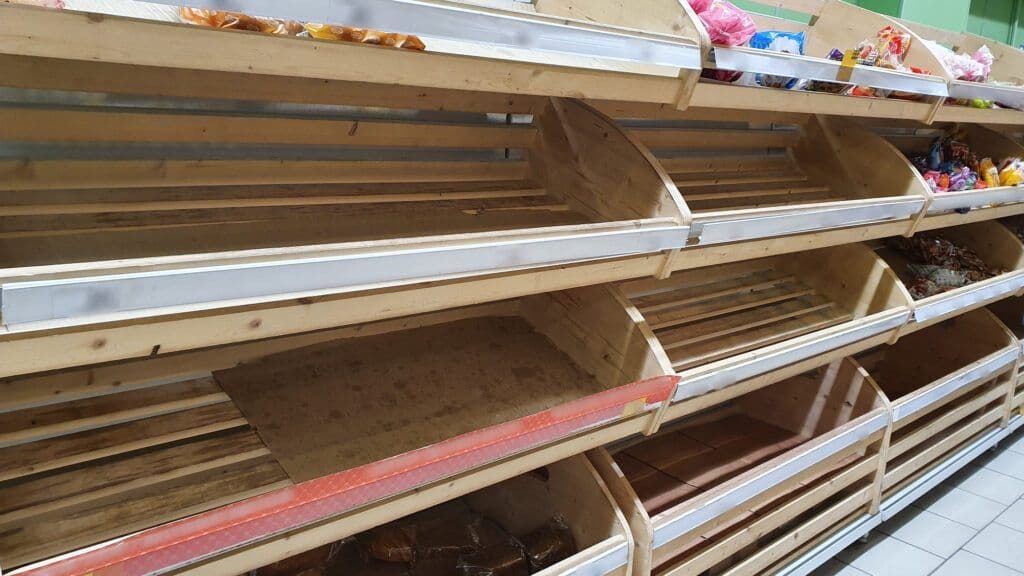
Indian naan, French baguettes, German rye, and Middle Eastern flatbread may trace their origins back to Ukraine. Enjoy bread while you still can. For now, it is affordable; tomorrow, there may be a sign on the bread shelf that says: “Sold Out.”
Summary and Wrap-Up
The fog of war obscures many things. When it lifts, there will be a collective realization that the term “bread lines” may be making an unwelcome comeback.
John Top.