Как работают деньги и что они значат сегодня
Вот как на самом деле работают деньги и что это значит для мировой экономики, включая торговую войну между США и Китаем.
от Equedia16 minute read

Дорогие читатели,
От НЛО и просочившихся документов, показывающих, что правительство может экспериментировать с инопланетными технологиями, до очередного инцидента с Ираном — мир, кажется, просто не может замедлиться и разобраться в себе.
Тем временем, несмотря на всю глобальную неопределенность, фондовый рынок продолжает расти, достигнув на прошлой неделе очередного исторического максимума.
Если бы вы вывели свои деньги из игры, вы бы упустили легкую и приятную прибыль в 19% – просто инвестировав в S&P 500.
И несмотря на то, что говорят вам «медведи» и аналитики, я неоднократно показывал вам, как оценивать рынок, следуя одному из самых точных рыночных индикаторов.
Если вы не знаете, что это такое, вы можете узнать, нажав здесь: The **Most Accurate Market Indicator**
Сегодня я хочу вернуться к письму, которое я написал еще в 2016 году.
Почему?
Потому что оно не только дает многие ответы на вопрос, почему фондовый рынок растет, но и помогает нам оценить и понять, что на самом деле происходит с торговой войной между США и Китаем.
И поскольку золото снова превысило US$1400 за унцию – чего мы не видели почти шесть лет – это также может помочь вам понять, почему золото растет и куда оно может пойти дальше.
Начнем.
Посмотрите видео вместо этого:
Как работают деньги
( Письмо Equedia, Сентябрь 2016)
Грядет массовый исход богатства.
Это будет катаклизм, не похожий ни на что, что когда-либо видел наш мир.
Он будет настолько мощным, что все предыдущие финансовые катастрофы покажутся ложем из цветов.
И все же, вопреки тому, что вы, возможно, думаете, я инвестировал в рынок больше, чем когда-либо за очень, очень долгое время.
Но почему? Разве это не будет прямым противоречием тому, что я только что сказал? Разве мы не должны выйти с рынка, если грядет такая финансовая катастрофа?
Чтобы ответить на этот вопрос, лучше всего объяснить ситуацию с макроэкономической точки зрения.
Основная причина коллапса
Каждый экономический бум за последние несколько столетий был создан в результате кредитной экспансии.
Каждый экономический спад также был создан в результате кредитной экспансии.
Итак, давайте вернемся в прошлое, чтобы понять, почему.
Когда все было просто

Не так давно торговля между странами осуществлялась путем обмена товарами и услугами.
Для простоты этой истории мы будем использовать золото в качестве валюты обмена – поскольку тогда каждая нация рассматривала золото как деньги.
Несколько сотен лет назад торговля между англичанами и голландцами была сильной.
Когда англичане торговали с Голландской Республикой и импортировали больше, чем экспортировали, у англичан был торговый дефицит.
Чтобы покрыть этот торговый дефицит, Англия отправляла золото в Голландскую Республику в качестве оплаты.
Поскольку золото было единственной реальной формой денег, денежная масса Англии сокращалась.
Это сокращение означало, что у английских банков было бы меньше денег для кредитования, что означало бы рост процентных ставок, потому что стоимость заимствований увеличилась бы, что означало бы, что меньше денег было доступно для экономического роста.
Если бы это продолжалось, это в конечном итоге привело бы к английской рецессии, и произошла бы дефляция.
Но с голландцами произошло бы обратное.
The trade surplus meant the Dutch had more gold – and since gold was the only real form of acceptable currency, this meant it’s money supply grew.
Увеличение денежной массы означало, что у голландцев было больше денег для кредитования, что делало заимствования дешевле и, таким образом, расширяло кредит, что привело к экономическому буму, который в конечном итоге вызвал инфляцию.
Имея больше денег, голландцы покупали больше английских товаров, которые были дешевле в результате дефляции в Англии.
Англичане, с другой стороны, имели меньше денег и не могли покупать столько голландских товаров, потому что голландские товары стоили дороже в результате инфляции.
В конечном итоге торговый дефицит Англии с Голландской Республикой снова пришел бы в равновесие.
Другими словами, международный торговый баланс поддерживался использованием золота в качестве денег.
Но этот баланс сохранялся только до тех пор, пока деньги не подвергались манипуляциям.
Первая мировая война
До Первой мировой войны мир функционировал по золотому стандарту – где золото было единственной приемлемой формой денег во всем мире.
Но когда началась Первая мировая война, ни у одной из стран не было достаточно золота для финансирования войны.
Так что же они сделали?
Они напечатали деньги для финансирования всех государственных облигаций и дефицитных расходов, необходимых для финансирования войны.
Когда война закончилась, было создано так много денег из напечатанного долга, что это подстегнуло глобальный экономический бум, возглавляемый западными странами.
Мы знаем этот бум как «Ревущие двадцатые».
Американские компании имели рекордные показатели производства, растущие продажи и миллионы долларов прибыли. Эта прибыль привела к высоким дивидендам и еще более высоким ценам на акции. Тысячи инвесторов хлынули на фондовый рынок, и многие использовали кредитное плечо и занимали деньги, чтобы купить еще больше.
Никто не думал, что этот бум закончится.
Но американские компании начали производить так много, что производили больше товаров, чем потребители могли купить.
Это, в свою очередь, привело к снижению продаж, цен и прибыли.
И со всеми долгами, которые были накоплены во время войны и последующего бума, большая часть из них не могла быть погашена.
Это привело к панике 1930 года.
В 1930 году, когда большая часть долгов не могла быть погашена, фондовый рынок США рухнул, денежная масса рухнула, и банковская система рухнула. Это привело к краху международной валютной системы, что привело к краху мировой торговли.
В течение следующего десятилетия весь мир застрял в трясине, которая стала известна как Великая депрессия.
Великая депрессия оказала глубокое влияние на американское общество и мир. Миллионы людей потеряли работу и дома. Тысячи умерли от голода. Число самоубийств резко возросло.
Когда депрессия все еще бушевала, началась Вторая мировая война.
Вторая мировая война
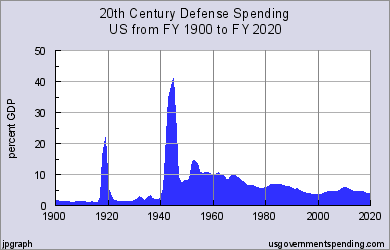
Когда Вторая мировая война закончилась, миру нужна была новая финансовая система – такая, которой могли бы доверять глобальные торговые партнеры, и такая, которая могла бы предотвратить манипуляции с валютой с помощью строгого финансового контроля.
Другими словами, мир хотел систему, в которой правительства не могли бы манипулировать своей собственной валютой, чтобы влиять на торговлю, и такую, где не было бы несправедливого роста быстрой кредитной экспансии.
Единственный способ сделать это – создать систему, подкрепленную чем-то, что не только сохраняет свою ценность, но и не может быть подвергнуто манипуляциям.
Этим чем-то было золото.
Но возвращение к золотому стандарту означало, что для многих стран снова возникнут дефляционные опасения.
Кроме того, США теперь контролировали почти треть мирового золота после WW2, и международная торговля не могла существовать в мире, где одна сторона владела всем золотом.
Так была создана Бреттон-Вудская система, согласно которой the US dollar служил бы международной валютой, обеспеченной золотом по фиксированной цене $35 per ounce.
В рамках этой системы страны, владеющие US dollars, имели право конвертировать эти dollars в золото по курсу US$35/oz.
Эта система работала… но недолго.
Финансовое изобилие
США начали чрезмерно тратить в 1960-х годах для финансирования войны во Вьетнаме и своих многочисленных программ социального обеспечения\
(*Как это делают США и Канада сегодня)
Это означало, что все больше и больше денег приходилось печатать для финансирования всех чрезмерных дефицитных расходов President Johnson.
Но Federal Reserve не могла просто продолжать печатать деньги. Почему?
Up until 1968, each Federal Reserve Bank had been required to hold a gold certificate reserve of not less than 25 percent against its Federal Reserve note liability.
Другими словами, если the Fed хотела напечатать $100 dollars, ей нужно было золото на сумму не менее $25 dollars.
Но золотой запас США настолько сократился, что Federal Reserve banks не могли выпускать больше dollars, потому что у них не было достаточно золота для их обеспечения.
Поэтому President Johnson получил одобрение congress и отменил закон, который требовал от the Fed поддерживать это золотое обеспечение.
С 1968 года золотого обеспечения внутри страны больше не было.
Тем временем стоимость the dollar продолжала расти. В результате US trade deficit продолжал увеличиваться.
Растущая стоимость the dollar сделала более выгодным инвестирование the dollars за пределами США, поэтому американские банки и корпорации начали инвестировать еще больше dollars в зарубежные страны, такие как Europe.
Конечно, это привело к тому, что больше dollars покинуло США, что означало постоянно растущий US trade deficit.
Баланс золота
По мере того как расходы правительства США продолжали расти вместе с неопределенностью государственной политики, иностранные государства, владеющие US dollars, начали конвертировать свои dollars в золото.
В результате США потеряли половину своих золотых резервов в шестидесятых годах. К 1971 году за границей было в четыре раза больше dollars, чем США имели золота для конвертации.
Поэтому в том же году President Nixon объявил миру, что они больше не смогут конвертировать свои dollars в золото.
К 1971 году золотого обеспечения на международном уровне больше не было.
Мир был в шоке, и мировая валютная система рухнула.
Under the Bretton Woods system, currencies were all pegged at a fixed exchange rate, and trade – for the most part – was in balance.
Но как только Nixon отменил золотое обеспечение на международном уровне, наряду с рекордными государственными расходами, система рухнула.
Инфляция также взяла верх, и commodity prices резко выросли. Oil, for example, went from $3.60 to over $35 in 10 years, climbing nearly 900%.
Fixed exchange rates became floating exchange rates and trade imbalances began to blow up.
Через Cato Institute:
“Beginning in the early 1980s, annual US trade deficits reached unprecedented levels. After decades of postwar surpluses, the US trade deficit topped $100 billion in 1984 and peaked at a record $153 billion in fiscal year 1987.”
Большая часть этого deficit приходилась на Japan. And that meant a boat load of dollars went into Japan.
Падение Японии
Все dollars, поступающие в Japanese banks, вызвали rapid deposit growth.
When banks hold deposits, they have to lend it out – otherwise, they would be forced to pay interest on those deposits.
So in order to make money, the banks have to lend those deposits out – otherwise, they would lose money.
Все dollars, входящие в Japan, вызвали massive credit boom, which fueled the Japanese stock market and had stocks trading at 100-times plus PE multiples. It also sent property prices skyrocketing.
But the surplus kept getting bigger and bigger because США не дефлировали because it didn’t run out of money. США kept on printing and Japan kept on absorbing all of those printed US dollars.
А вот и самое интересное.
Когда US dollars поступают в Japan, the Japanese can’t spend it at home because it’s not their currency. So they have to convert their dollars to yen by trading dollars for yen.
But when that happens, it decreases the money supply of yen.
This would force the yen higher and eventually take away the currency benefit of having a cheaper yen, leading to lower exports and a tumbling economy.
Центральным банкам по всему миру не потребовалось много времени, чтобы понять, что без gold-backed system, они также могут печатать money и использовать that money to buy dollars to hold down the exchange rate.
В конечном итоге, однако, Japanese economic bubble popped.
The bubble was so big that Japan is still battling deflation and is no bigger today than it was in 1993.
Соглашение Плаза
Between 1980 and 1985 the dollar had appreciated by about 50% against the Japanese yen, Deutsche Mark, French Franc and British pound – the currencies of the next four biggest economies at the time.
Чтобы исправить огромный US trade deficit, these five nations reached an agreement to devalue the dollar. This became known as the Plaza Accord.
By 1987, the dollar devalued by as much as 51% against the Mark and the Yen.
By 1991, the devaluation brought the US trade back into balance.
Конечно, этот баланс продержался недолго.
Входит Китай
After the Plaza Accord, trade relations with China and США “coincidentally” began to get better.
And with a massively devalued dollar, американские corporations began looking elsewhere for cheaper labour.
Именно здесь China starts coming into the global economy, along with other Asian countries.
The cheap workforce in Asia led to an increase in торговля США, and so the US trade deficit grew once again.
By August 2006, the US trade deficit had grown to a record high of US$762 billion.
Это почти US$1.5 миллиона, покидающие США каждую минуту.
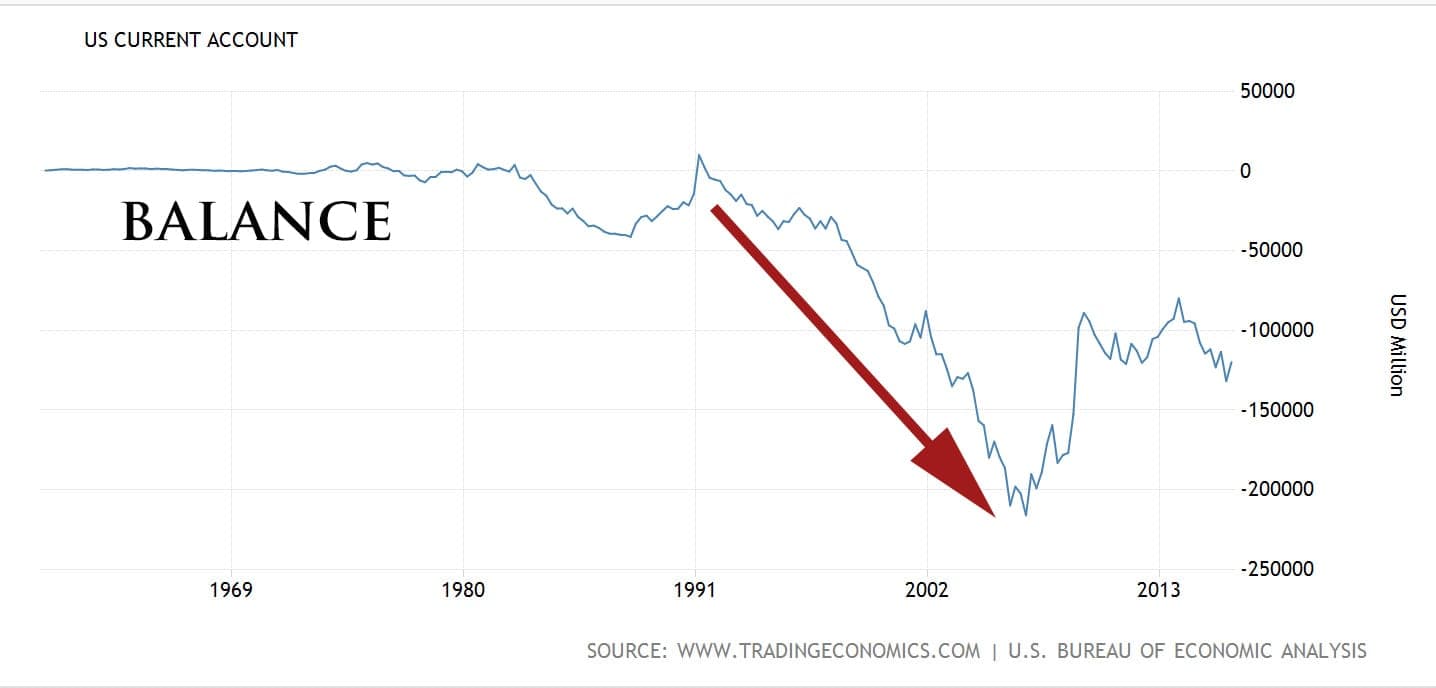
Это, конечно, было отлично для global economy.
But as the US trade deficit got bigger with China, China’s surplus got bigger. That meant China now had a ton of money coming into the country.
And as we just learned in the case of Japan, when money enters China, it causes rapid deposit growth leading to rapid credit expansion. It also forces China to print money in order to hold down the exchange rate.
That’s how China’s foreign exchange reserves grew to over US$4 trillion, while Japan holds over US$1 trillion. That’s also why both Japan and China have printed trillions upon trillions of their own currencies.
Экспоненциальный рост денежной массы
Когда США печатают money, China and countries all around the world do as well. That means every dollar, который печатают США, increases the global money supply exponentially.
Но это еще не все.
China and Japan can’t just leave the foreign reserves sitting in a bank because if they did, it would simply sit there and do nothing. So it has to invest it in US-dollar denominated assets such as недвижимость США, акции США, and of course, корпоративные и государственные облигации США, otherwise known as debt.
Of course, this pushes the price of everything in США higher including stocks and bonds. And when the prices of bonds go up, yields go down, so interest rates go lower and lower.
This massive amount of investment back into США was what helped finance the bonds issued by Fannie Mae and Freddie Mac, who borrowed trillions of dollars, largely financed by these foreign central banks. This, along with low-interest rates caused by the bond-buying spree, pushed up property prices and created the property bubble that burst in 2007.
Как видите, все money, покидающие США, goes back into fueling the financial bubble.
And the bigger that bubble became, the more money Americans had to buy things from China and Japan, thus fueling the bubble even further.
This is the main reason why the price of bonds and stocks in США are so high and why interest rates are so low right now. It’s why real estate prices all over Canada have skyrocketed.
It’s also why we’re in the biggest financial bubble the world has ever seen.
Какое повышение?
Что возвращает нас к сегодняшнему дню ( имейте в виду, что хотя я сказал это в 2016 году, это все еще актуально сегодня).
Когда the 2008 financial crisis hit as a result of rapid credit expansion, the world tumbled.
Today, we’re in an even bigger financial bubble than we were in 2008 because, as I just explained, all of the dollars printed to fix the 2008 bubble has exponentially grown the global money supply and fueled an even bigger credit expansion worldwide.
Asset prices and the global economy are being held up by the rapid expansion of credit and low-interest rates around the world.
If, and when, interest rates rise, asset prices will crash and the economy would likely sink into a very deep recession – we already saw this occur (in 2015) when the Fed raised rates just slightly.
The question is, when will the central banks allow interest rates to rise? In most of the world, central banks aren’t allowing them to.
It is only in США where the Fed has hinted at raising interest rates, yet fail to do it every time.
Even if the Fed does raise interest rates, you can bet that massive stimulus measures would follow.
A few weeks ago (again, keep in mind we’re talking about 2016), I wrote the Letter, “ Can the Fed Buy Stocks?”
“Even more disturbing are the hints Yellen gave suggesting the Fed could break policy and consider “some additional tools that have been employed by other central banks.”
This, of course, includes buying a wider range of assets or raising the inflation target – both of which means the Fed will own more, for less.
It could also mean that the Fed may buy equities in the future.”
In other words, raising rates would undoubtedly be a threat to the economy and political stability – unless the Fed were to do something else.
Something like QE4.
And that would mean another massive increase in the global money supply.
In fact, precursors to QE4 are already here.
Пузырь на рынке жилья становится больше
In May 2016, I wrote how America’s biggest banks were already being forced to lower their lending standards and thus creating the next housing bubble.
“Wells Fargo & Co. has started offering a new type of mortgage that requires a tiny down payment and could appeal to customers who might otherwise get loans backed by the Federal Housing Administration.
…They’re not the only ones offering these non-FHA, 3%-down, riskier mortgages.
Last week, JP Morgan announced the launch of a similar product…
The Bank of America also announced a similar program back in February.”
Turns out, Freddie Mac wants in on the fun.
Via Realtor Mag from September 2016:
“In a new pilot program, Freddie Mac and two non-bank lenders are easing income and documentation requirements for mortgage borrower applicants.
The aim is to fuel more mortgage originations among first-time buyers, who tend to have more low to moderate incomes and to better reach those who live in underserved areas, The Wall Street Journal reports.
In the pilot program, Freddie Mac says that applicants will be able to use the income of others who live with the borrower but who aren’t going to be on the mortgage to qualify.
Also, income from second jobs that borrowers have held, even for a short period of time, can now be factored in. The program will also not require borrowers to come up with bank statements to show how they saved for their down payment.”
We’re already seeing 2008 all over again – only on a much bigger scale\
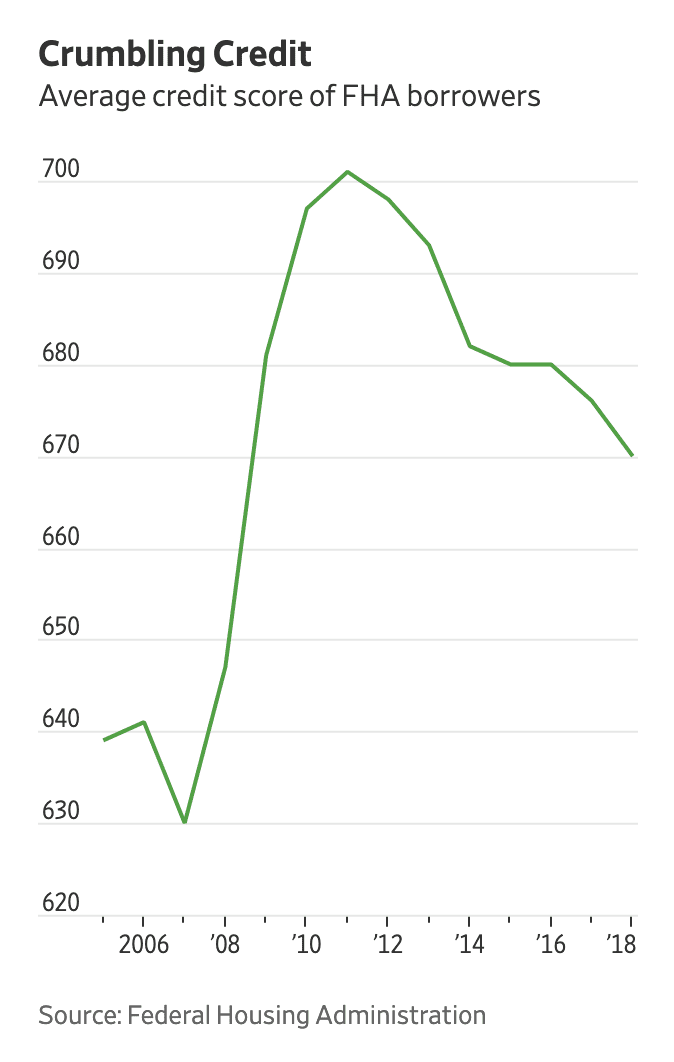
*Примечание: В марте 2019 года Federal Housing Administration наконец сообщило lenders, что начнет помечать больше loans как high risk:
“…The FHA’s decision to tighten underwriting standards could mean fewer first-time home buyers are able to get mortgages.
The move is an about-face from a 2016 decision to loosen underwriting standards. At the time, the FHA removed an earlier rule that required manual underwriting for mortgages with credit scores below 620 and a ratio of debt to income above 43%.
“Since that happened, we have observed a steady increase in the endorsement of higher-risk loans,” Mr. Becker said. The FHA has also been warning of rising risks in the portfolio that it insures in its annual reports submitted to Congress.”
Just take a look at the share of FHA borrowers whose debt payments are more than half of their income and the average credit scores of FHA borrowers:
Возвращаясь к моему письму 2016 года…
Китай: Следующая Великая депрессия?
China, now considered a global economic leader, has been producing an excessive amount of goods and excess industrial capacity.
In fact, in just three years from 2011-2013, China produced more cement than США did in the entire 20th century combined!
It hasn’t slowed down and it’s eerily reminiscent of what led США to the Great Depression.
I expect that while the US dollar has been strong in anticipation of a Fed hike, the US Dollar will likely fall against the Yen, Euro, Canadian, and Aussie dollar, going into the New Year and maybe even before.
So don’t be surprised to see gold climb higher as the US dollar drops in value.
Куй железо, пока горячо
Я считаю, что единственный способ защитить и подготовить себя к этой быстрой кредитной экспансии – это накопить как можно больше богатства и перевести его в то, что имеет наибольшее значение, например, в ваш дом.
На протяжении многих лет, включая некоторые из моих недавних писем, я говорил читателям воспользоваться этим масштабным финансовым бумом.
From my 2016 Letter, “ Can the Fed Buy Stocks?“:
“…Our job is to protect our wealth based on (central bank) policies.
This includes everything from investing in and exiting the right areas at the right time.
(Yes, gold is just one of the viable long-term options in this regard.)
We’re in an era of cheap money and there is A LOT of it – but only if we put it to work.
Holding cash means you’re likely losing wealth over time. If you want to protect your wealth, you have to put it to work – that is the position the central banks have put us in.”
If we sit and risk nothing, we’ll see the value of our money depreciate very rapidly in this world of expanding money supply and credit.
We have been very lucky over the past years and have had some incredibly big winners.
I’ve fueled a lot of these profits into new – and more – investment opportunities, and will continue to do so until I see stronger signs that the “economic reset” button is about to be pushed.
Заключение
I wrote this Letter back in September 2016. And despite all of the uncertainty that has shrouded our global economy, stocks have moved higher.
Furthermore, this Letter gives us strong insight into what is happening now with the США-China trade war.
Despite all of президента США Donald Trump’s attempts to balance the trade deficit with China, he will fail. Tariffs won’t be enough, nor will some sort of currency agreement where China agrees to holding their currency at a specific rate against the US dollar. It simply can’t happen under our current financial system.
While he may reach a deal to shrink the trade balance slightly, there is simply no way to balance it when money is now backed by nothing more than the promises of central banks.
Perhaps that’s why gold is once again rising and why inflows into gold have continued to climb all year.
If an agreement can’t be reached between China and США, gold prices will likely go even higher. This, of course, means gold stocks should do very well in near-term.
Just keep in mind that for as long as interest rates remain low and the Fed continues to intervene, money will likely continue to flow into the stock market – which means gold will still take a backseat.
And while we have had many grand successes with gold stocks before, and believe we should maintain a small portion of our portfolio in these assets, we shouldn’t be too excited yet.
Gold is up 10% on the year, but the S&P 500 is up almost double that.
It’s time to once again to look at gold stocks, but don’t jump all the way just yet.
До следующего раза.
Ищите истину,
Ivan Lo
The Equedia Letter
Раскрытие информации:
Equedia.com and Equedia Network Corporation не зарегистрированы в качестве investment advisers, broker-dealers или других securities professionals с каким-либо financial or securities regulatory authority. Помните, что past performance is not indicative of future performance. Эта статья также содержит forward-looking statements, которые подвержены risks and uncertainties, которые могут привести к существенному отличию actual results от forward-looking statements, сделанных в этой статье. То, что многие компании в наших предыдущих Equedia Reports показали хорошие результаты, не означает, что все они покажут.