L'Entità Responsabile dell'Intero Mondo e Cosa Sta Per Fare
Negli ultimi anni, ho scritto per prepararvi a ciò che credo accadrà in seguito – non solo con il mercato azionario, ma con l'intera economia globale. Oggi, mantengo le cose semplici. Dimenticate tutto ciò che sentite su disoccupazione, valutazioni e guadagni, ecco cosa conta davvero.
di Equedia12 minute read

Dimenticate Tutto Quello Che Vi Dicono Gli Esperti Finanziari…
Il Mercato Vive e Muore Per Questo
Negli ultimi anni, ho scritto per prepararvi a ciò che credo accadrà in seguito – non solo con il mercato azionario, ma con l'intera economia globale.
Mi sono state chieste le mie riflessioni non solo su cosa aspettarsi, ma anche su cosa intendo fare con le mie aspettative.
Quindi oggi, voglio rispondere a queste domande nel modo più semplice possibile.
Questa sarà una breve lettera; non perché manchi di contenuto, ma piuttosto perché voglio evidenziare un modo semplice per comprendere le dinamiche della nostra economia globale.
Potreste scoprire che molte delle risposte che cercate possono essere trovate facendo riferimento a questa Lettera.

È Piuttosto Semplice
Innanzitutto, dovete capire che le dinamiche dell'economia globale sono controllate da strumenti finanziari – siano essi stocks, derivatives, currencies, bonds, debt, ecc.
Questi strumenti hanno il loro scopo, ma le loro radici convergono inevitabilmente verso un unico semplice concetto…
Il Concetto di Denaro
Il denaro, nel termine più semplice, è il concetto di un mezzo che può essere scambiato con beni e servizi e una riserva di valore o ricchezza.
In definitiva, il denaro può essere molte cose a seconda delle parti coinvolte nello scambio.
Ad esempio, il denaro può essere oro, argento o monete, e può essere pezzi di carta che chiamiamo banconote; questo perché si può quasi universalmente scambiare ognuna di queste cose con qualcos'altro.
Nella nostra era moderna, la valuta è diventata la forma primaria di denaro.
La valuta è un sistema monetario di uso generale in un particolare paese; il suo valore si basa sull'offerta e sulla domanda, proprio come qualsiasi altra cosa. Generalmente, questa offerta e domanda si basa sulla forza economica (GDP, balance of trade, ecc.) e finanziaria (assets, interest rates, debt, money supply, ecc.) dei rispettivi paesi emittenti.
In definitiva, il denaro è la radice della nostra economia globale, mentre la valuta è la forma primaria di denaro.
Una volta che lo prendiamo per buono, diventa molto più facile capire non solo cosa sta succedendo, ma anche cosa sta per accadere.
Chi Controlla il Denaro?
~Nathan Rothschild
Ah, la famosa citazione di Nathan Rothschild. Che questa citazione sia stata effettivamente scritta o pronunciata da Nathan Rothschild è irrilevante.
Ciò che è rilevante è che la citazione è, di fatto, molto vera.
Chiunque controlli l'offerta di moneta controlla l'economia in cui risiede quella valuta.
Ma nella nostra era moderna di globalizzazione, chiunque controlli l'offerta di moneta della valuta più utilizzata al mondo può effettivamente controllare l'intera economia globale.
E quale entità controlla l'offerta di moneta della valuta più utilizzata al mondo?
L'Entità Più Potente del Mondo
La Federal Reserve, o la Fed, controlla l'offerta di moneta negli Stati Uniti, che è la patria del US dollar – la forma di denaro più ampiamente utilizzata e accettata al mondo.
E come sappiamo, dal 2008, la base monetaria, ovvero la somma della valuta (incluse le monete) in circolazione al di fuori delle Federal Reserve Banks e del U.S. Treasury, più i depositi detenuti dalle istituzioni depositarie presso le Federal Reserve Banks, è più che quadruplicata dal 2008.
Non dimentichiamo che debt, stocks, bonds, e molti altri strumenti finanziari possono essere anch'essi denaro.
Ciò significa che l'offerta di moneta reale complessiva è cresciuta ancora di più.
Questo è il modo della Fed di gonfiare l'economia aumentando l'offerta di moneta.
Come ho menzionato in lettere precedenti, la Federal Reserve è responsabile della gestione della politica monetaria. Ciò significa che manipolano i tassi di interesse per raggiungere un obiettivo di inflazione desiderato.
Oltre a gestire la politica monetaria, la Fed supervisiona anche tutte le banche negli Stati Uniti e fornisce servizi finanziari a istituzioni depositarie come banche, cooperative di credito e casse di risparmio e prestito – una banca per le banche, per così dire.
Questo è importante perché le azioni della Fed sono ciò che detta ciò che accade all'economia globale.
Nel corso della storia, la Fed ha gonfiato e sgonfiato l'economia abbassando e alzando i tassi di interesse, nonché aumentando e diminuendo l'offerta di moneta.
La storia ci mostra che quando la Fed abbassa i tassi di interesse e aumenta l'offerta di moneta, l'economia fiorisce; quando la Fed alza i tassi di interesse e diminuisce l'offerta di moneta, l'economia si contrae.
Ecco una breve lezione di storia dalla Federal Reserve stessa…
Storia della Federal Reserve
Tramite Federal Reserve History:
“ Riguardo alla Great Depression, … l'abbiamo fatto noi. Ci dispiace molto. … Non lo faremo più.” – Ben Bernanke, 8 novembre 2002, in un discorso tenuto a “A Conference to Honor Milton Friedman … On the Occasion of His 90th Birthday.”
Nel 2002, Ben Bernanke, allora membro del Federal Reserve Board of Governors, ha riconosciuto pubblicamente ciò che gli economisti credevano da tempo. Gli errori della Federal Reserve hanno contribuito al “ peggior disastro economico nella storia americana” (Bernanke 2002).
Bernanke, come altri storici economici, ha caratterizzato la Great Depression come un disastro a causa della sua durata, profondità e conseguenze. La Depressione durò un decennio, iniziando nel 1929 e terminando durante la World War II. La produzione industriale crollò. La disoccupazione salì alle stelle. Le famiglie soffrirono. I tassi di matrimonio diminuirono. La contrazione iniziò negli Stati Uniti e si diffuse in tutto il mondo. La Depressione fu la recessione più lunga e profonda nella storia degli Stati Uniti e dell'economia industriale moderna.
La Great Depression iniziò nell'agosto del 1929, quando l'espansione economica dei Roaring Twenties giunse al termine. Una serie di crisi finanziarie punteggiarono la contrazione. Queste crisi includevano un stock market crash nel 1929, una serie di panici bancari regionali nel 1930 e 1931, e una serie di crisi finanziarie nazionali e internazionali dal 1931 al 1933. La recessione toccò il fondo nel marzo del 1933, quando il sistema bancario commerciale crollò e il Presidente Roosevelt dichiarò una festività bancaria nazionale.
…Per capire l'affermazione di Bernanke, bisogna sapere cosa intendesse con “noi,” “l'abbiamo fatto,” e “non lo faremo più.”
Con “noi,” Bernanke intendeva i leader del Federal Reserve System.
…Con “l'abbiamo fatto,” Bernanke intendeva che i leader della Federal Reserve hanno implementato politiche che ritenevano fossero nell'interesse pubblico. Involontariamente, alcune delle loro decisioni hanno danneggiato l'economia. Altre politiche che avrebbero aiutato non sono state adottate.
Un esempio del primo è la decisione della Fed di aumentare i tassi di interesse nel 1928 e 1929.
La Fed lo fece nel tentativo di limitare la speculazione nei securities markets. Questa azione rallentò l'attività economica negli Stati Uniti. Poiché il gold standard internazionale collegava i tassi di interesse e le politiche monetarie tra le nazioni partecipanti, le azioni della Fed scatenarono recessioni in nazioni di tutto il mondo. La Fed ripeté questo errore rispondendo alla crisi finanziaria internazionale nell'autunno del 1931.
…Un esempio di quest'ultimo è il fallimento della Fed nell'agire come prestatore di ultima istanza durante i banking panics iniziati nell'autunno del 1930 e terminati con la banking holiday nell'inverno del 1933.”
Si noti che, prima della Great Depression nel 1929, l'economia statunitense era in piena espansione e gli stocks stavano salendo vertiginosamente – molto simile a oggi (on paper, anyway).
Per frenare l'esuberanza, la Fed decise di aumentare i tassi di interesse e contrarre l'offerta di moneta (secondo le loro stesse parole, per limitare la speculation nei securities market).
Le azioni della Fed portarono alla peggiore economic depression nella storia degli Stati Uniti.
Se pensate che il 1929 sia stata un'anomaly verificatasi solo perché la currency era backed by gold, ripensateci…
Trovare l'Equilibrio: Gonfiare e Sgonfiare
Nel 1971, United States President Richard Nixon rimosse la direct international convertibility del United States dollar in gold.
In altre parole, il US dollar divenne una fiat currency backed by nothing more than a promise from the government. Should the government fail, the currency would likely become worthless.
Come risultato del Nixon Shock, l'inflation decollò mentre il value of the US dollar sank.
Nel marzo 1972, la Fed iniziò ad hike interest rates per combat the falling dollar. They were aggressive in their actions and hiked rates 21 times over the course of the next year in order to tame the runaway inflation taking place.
Ma le loro azioni ebbero serious consequences.
Ciò che seguì fu la first major recession of the early 1970’s.
La Fed continued to hike rates up until 1974 when it finally decided to shift course and reflate the economy by lowering rates later that year.
By lowering rates, la Fed put an end to the stagnation/recession of the early 1970’s.
Ma la Fed simply cannot keep rates low for long…
A couple of years later, la Fed hiked rates again starting in December 1976. This, of course, led to yet another small recession in 1980. To combat this again, la Fed lowered rates.
Over the next few years, la Fed went back and forth hiking and lowering rates until it reached a peak interest rate level of 20 percent.
These rate hikes once again put the US into a major recession – one that became known as the second-worst recession since the Great Depression, second only to the Great Recession of 2008.
Unsurprisingly, to combat the recession that resulted from the rate hikes, la Fed slashed rates by nearly 50 percent from the 20 percent in June 1981 down to 10.8 percent in November 1982.
Because of the dramatic rate hikes of the 70s and early 80s, la Fed slowed their rates hikes in the late 80s, raising rates just over 3 percentage points over the course of 22 months.
Eventually, the rate hikes took effect which led to the Black Monday stock crash of October 1987. And again, prompted la Fed to – you guessed it – lower rates.
Over the next few years, la Fed continued to slowly lower rates to stimulate the economy.
When the economy picked up steam, la Fed hiked rates yet again.
Between 1995 and 2000, the world was taken by storm by a unique economic occurrence – the consumerization of the Internet, which paved the way for the dotcom bubble.
When the bubble burst in 2001, it wiped out trillions of dollars. As a result, la Fed was once again forced to ease and lower interest rates over the following years.
This led to the market exuberance which caused the housing bubble of 2008.
As you can see, it’s a rather simple cycle.
La Fed inflates and deflates, and inflates and deflates…
Cosa Succederà Dopo?
Come ho menzionato nella ultima newsletter, la Fed è ora sulla strada per aumentare i tassi di interesse e diminuire l'offerta di moneta.
Tramite “Cosa Succede Quando Scoppia la Bolla Finanziaria”:
“Siamo certamente late in the cycle of a financial bubble.
The earnings of S&P 500 companies have gone back to 2011 levels, yet the market is up 70%. Furthermore, over the last three years, debt accumulation has outpaced both EBITDA growth and cash generation.
That makes U.S. equities one of the most expensive asset classes in the world.
In terms of a bubble, we’ve certainly reached the euphoria stage.
While this bubble still has room to grow because of the new consumer credit boom, we’re already witnessing signs of the next stage of a financial bubble: profit taking.
Corporations are no longer buying back stock and insiders are now selling more stock than they’re buying. Meanwhile, the smart money continues to take profits.
The problem is that this market euphoria is pushing the debt envelope further as consumers take on even more credit during a time when interest rates are likely to rise.
In the past year and a half, la Fed has raised interest rates three times and is expected to raise them three more times before this year is over.
In addition, la Fed is expected to reverse QE by reducing its balance sheet and contract the money supply.
As I mentioned earlier, when credit dries up, the bubble pops.
When it does, it will be the biggest economic reset the world has ever seen.”
It’s hard to fathom that Ben Bernanke’s statement of “we won’t do it again,” had the right intentions because throughout history, la Fed inflates and deflates in order to maintain balance and control the world’s money supply.
If la Fed allows our market exuberance to continue, people will eventually lose faith in the current monetary system and la Fed will lose control.
After nearly a decade of low interest rates and a massive increase to the money supply, the next step for la Fed is to deflate the inflation.
And that’s precisely what la Fed appears to be doing.
Now you might be thinking, “what inflation?”
La Vostra Idea di Inflazione è Sbagliata
Here’s where I think everyone has it wrong.
While it’s true that inflation hasn’t soared alongside the rapid increase in the monetary base, it only remains true under la Fed’s definition of inflation, which is measured by the Personal Consumption Expenditures (PCE), the primary measure of consumer spending on goods and services in the U.S. economy.
But remember, just as money isn’t simply currency, the PCE isn’t the only form of inflation.
To truly see if the massive increase in the monetary base has inflated the economy, both directly and indirectly, we must follow the money. Only by following the money will we see the true effects of la Fed’s monetary policies.
Segui il Denaro: Cosa è Successo all'Inflazione
Since 2009, U.S. stocks have gone up over 300% – just shy of the percentage increase in the monetary base.
Where’s the rest of that flow?
The average home in the U.S. is now more expensive than it was before the 2008 housing crisis and has climbed more than 40 percent since the beginning of 2012.
In larger cities such as Los Angeles, California, and Seattle, Washington, housing prices have climbed over 60 and 70 percent, respectively, during that same time.

In Vancouver, BC, Canada, the price of a detached home averaged just under CDN $800k at the beginning of 2009 but reached over $1.8 million last year – an increase of over 125%.
In other words, inflation has most certainly occurred but it’s been focused on where the money has flowed: housing, stocks, and other financial instruments.
Even if we take just housing and stocks, then most certainly we have witnessed inflation equal to that of the increase in the monetary base.
Mettere in Prospettiva
Since 2008, the total market capitalization of listed US companies has climbed from US$11.59 trillion to over $27.35 trillion in 2016. That’s nearly 16 trillion US dollars of wealth created in seven years – more than triple the value of the newly created money supply since 2008.
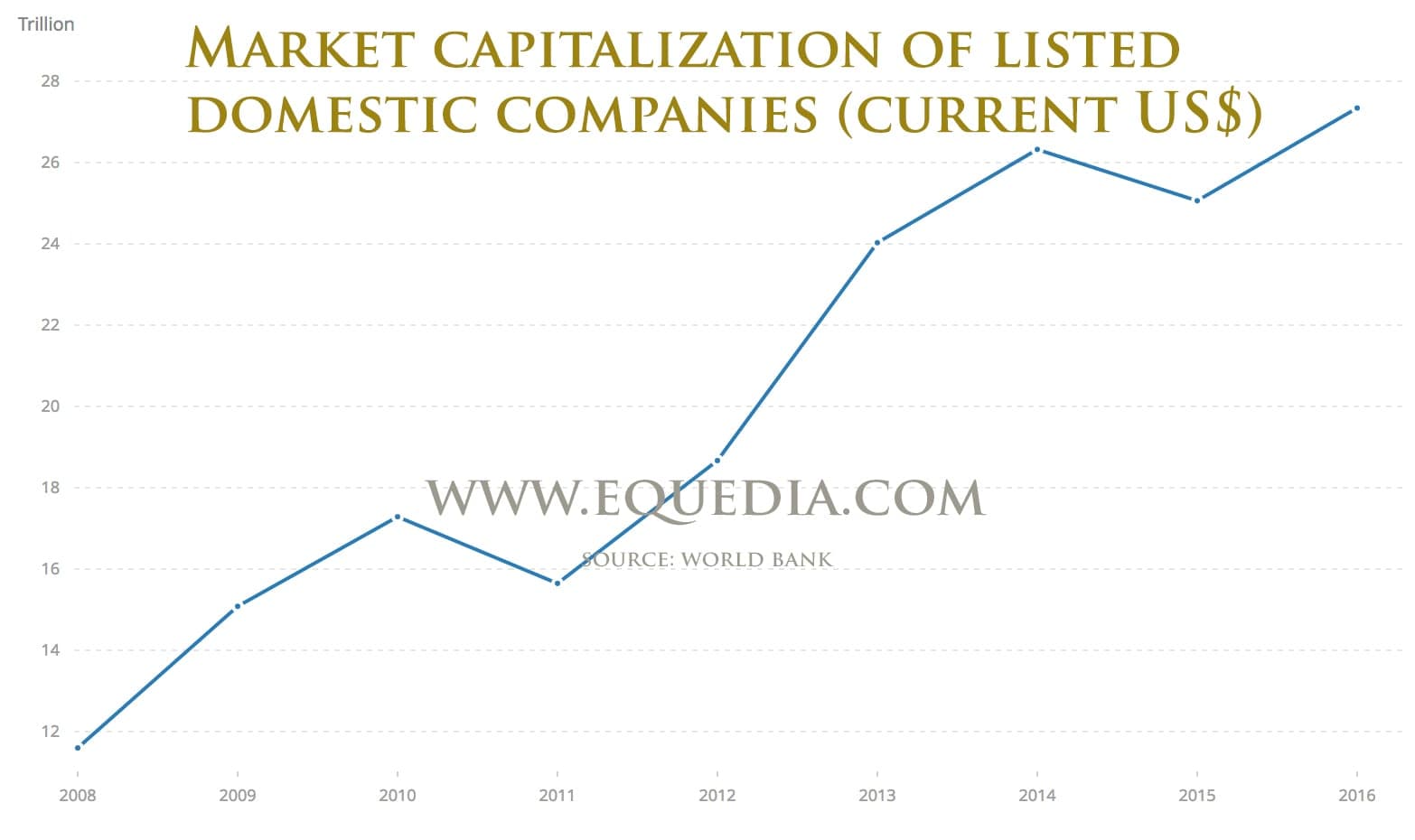
Globally, the value of listed securities has climbed more than US$33 trillion in that same period.
In late 2011, the total value of every home in the United States was worth US$22 trillion. By the end of last year, it reached over $29.6 trillion – that’s more than $7 trillion of wealth created in five years – nearly double the value of the newly created money supply since 2008.
Cosa Fare
Se siete un diehard anti-government radical thinker e credete che il peggio possa accadere, vorreste certamente comprare quanto più gold, silver, e tangible coins possibile.
Ma se questa è la vostra visione, sappiate che quando le cose si sgonfiano, anche gli hard assets lo fanno e questo può includere gold e silver. Quindi, finché considerate gold e silver come un asset protection piuttosto che un investment, dovreste stare bene.
D'altra parte, se siete più grounded e credete che le nostre primary world currencies non falliranno, allora sarebbe saggio cash up by selling inflated assets before they deflate. In questo modo, potrete avere un big war chest to buy assets on the cheap when things deflate – pensate a Warren Buffett.
Conclusione
Possiamo passare innumerevoli ore a parlare di earnings, real estate, employment, ecc., ma tutto si riduce a ciò che la Fed farà dopo.
Sottolineo che la Fed è già sulla strada della deflazione.
E poiché gran parte dell'inflazione è andata in stocks e housing, è probabile che lì avverrà la maggior parte della deflazione per prima.
Quanto tempo ci vorrà prima che le pressioni deflazionistiche crollino dipenderà dalla velocità con cui agirà la Fed.
Alla fine, tuttavia, arriverà un breaking point e sospetto che non sarà più di un 2% rise in interest rates da qui.
So, what should we do based on these expectations?
Come ho menzionato nella mia ultima Lettera, abbiamo ancora un po' di tempo prima che ciò accada a seguito della prossima spinta nel consumer debt. Questo dovrebbe fuel spending e anche increase housing prices in parts of the United States where prices have not recovered from 2008.
Ciò significa che c'è ancora room to make a profit before it comes crashing down.
I am looking to slowly ease myself out of many investments over the next 6-12 months (depending on Fed actions) and only invest or trade in things that have a chance at being bought out within that time frame, or unique opportunities in new markets such as marijuana (think dotcom boom before the bust).
In the near term, if you don’t think things will crash within the next few months, Canadian stocks generally find a seasonal bottom at the end of July before bouncing back late summer and into Q3. From a historical perspective, that means if you’re going to buy Canadian stocks, now is the time to do so before the market bounces back.
Personally, I hope we have 6-12 months before the market crashes to invest now, ride the wave, and cash out before the real deflationary pressures in housing and the stock market take place.