Trump’s “Economic D-Day” on Iran: What Investors Should Watch
Trump’s threat of unprecedented economic warfare against Iran could hit oil flows, banks, shipping and inflation. The decisive issue for investors is enforcement—not rhetoric.
by Equedia6 min read
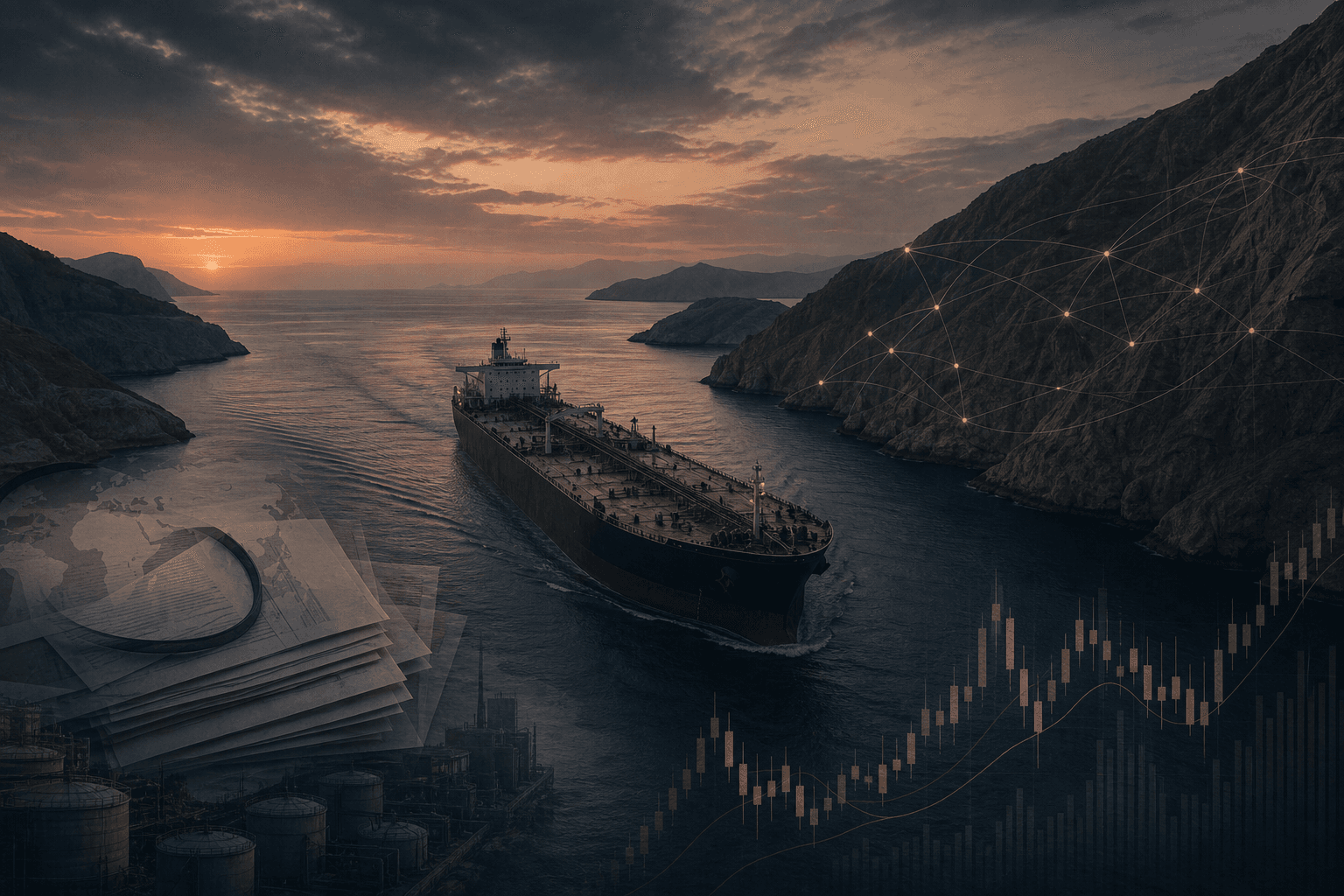
Donald Trump has declared an “economic D-Day” against Iran, escalating a sanctions campaign that was already reaching deep into the country’s oil trade. For investors, however, the severity of the language is less important than the enforcement that follows—particularly against the foreign banks, refiners, ports and shipping networks that connect Iran to the global economy.
The announcement is broad enough to affect oil prices, inflation, interest rates, China and global risk appetite, yet it arrived without a detailed sanctions package. Until those details emerge, Treasury’s next actions will carry more weight than the headline.
What Trump actually announced
In an August 19 Truth Social statement, Trump promised the “most crushing economic operation ever taken against any country.” He warned that countries allowing their financial institutions, businesses, airports or government entities to provide Iran with a lifeline would face “tremendous economic consequences.”
By naming oil smuggling, swap lines, cash transfers, exchange houses, ship registries and front companies, Trump signalled that the campaign could reach well beyond Iranian officials and state entities. Iran is already heavily sanctioned, so another round of domestic designations would increase pressure without necessarily changing the market’s assumptions. The more consequential threat is secondary enforcement, which would force foreign companies and financial institutions to choose between doing business with Iran and retaining access to the U.S. financial system.
A serious push in that direction would carry the sanctions campaign into China, Hong Kong, Gulf trading hubs, flag registries, insurers, ports and payment networks. It would also raise the economic and diplomatic cost for Washington, especially if major institutions rather than replaceable intermediaries become the targets.
The campaign was already moving in this direction
The administration’s “Economic Fury” campaign had begun targeting the machinery behind Iran’s oil trade before Trump’s latest announcement. In April, the U.S. Treasury sanctioned a major Chinese independent refinery and roughly 40 shipping firms and vessels. Treasury said China’s independent “teapot” refiners buy the majority of Iran’s crude oil and that more than 1,000 Iran-related people, vessels and aircraft had been sanctioned since February 2025.
The pressure is concentrated at four points:
- Buyers: refiners willing to purchase discounted Iranian crude.
- Payments: banks, exchange houses, swap lines and digital channels that move or repatriate funds.
- Logistics: tankers, ship managers, insurers, ports and registries that keep cargoes moving.
- Front companies: intermediaries that can be replaced when one entity is exposed.
Counting sanctioned vessels alone gives an incomplete picture because smaller operators can disappear and re-emerge under new names. The market impact becomes more serious when larger banks, refiners, ports or governments conclude that the commercial benefit no longer justifies the risk of U.S. penalties.
Oil is the fastest transmission channel
Brent crude had already settled at $91.62 a barrel on August 19, its highest close in nearly four weeks, before Trump issued the statement. The move reflected the wider conflict and slow traffic through the Strait of Hormuz, rather than a post-announcement reaction.
The Strait carried about one-fifth of global oil and liquefied natural gas supplies before the war, leaving investors to assess a risk much larger than the loss of Iranian exports alone. The market now faces two distinct channels of disruption.
The first is an enforcement shock. If U.S. measures make Iranian crude harder to buy, finance, insure and transport, fewer barrels may reach the market. Prices would likely receive support, although other producers and available inventories could absorb part of the shortfall.
The second is a Strait of Hormuz shock. If economic pressure triggers retaliation that restricts shipping further, the disruption could extend to exports from several Gulf producers. That is the more dangerous tail risk because it threatens a far larger share of global supply.
Our earlier analysis of why oil prices rise remains relevant: the marginal barrel counts, but so do positioning, expectations and confidence that supply will remain available. The long history behind the Iran nuclear dispute also shows that sanctions often serve a negotiating strategy rather than operating as an isolated policy.
Three scenarios investors should prepare for
1. Enforcement stays narrow
Washington could sanction more small trading firms, vessels and intermediaries while avoiding a confrontation with major banks or refiners. Iran’s trade would become more expensive and less efficient, but its evasion networks could continue to adapt. Oil might retain a geopolitical premium without producing another major spike, supporting energy shares while the broader equity market treats the campaign as an escalation in degree rather than a new global shock.
2. Secondary sanctions hit major institutions
The risk rises sharply if the United States targets a large Chinese bank, a strategically important refinery, a major port or an institution that clears significant international transactions. Such action could reduce Iranian exports more materially while opening a second conflict between Washington and Beijing over extraterritorial sanctions.
Upstream energy producers may benefit from higher prices in this scenario, but the rest of the market faces a tougher equation. Airlines, transport companies and energy-intensive manufacturers would absorb higher costs, while rising inflation expectations could leave central banks with less room to cut rates. That combination would pressure long-duration bonds and highly valued growth stocks.
Banks would also face higher compliance costs and greater counterparty risk, while emerging-market currencies tied to imported energy could weaken. Even companies with no direct Iranian exposure would feel the effects through freight, insurance, fuel and financing costs.
3. Sanctions become leverage for a deal
Trump’s language may be designed to create maximum pressure before a return to negotiations. If an agreement restores traffic through Hormuz or produces credible sanctions relief, the oil risk premium could compress quickly. Energy shares that rallied on scarcity could surrender gains, while airlines, consumer businesses and other fuel-sensitive sectors recover.
Broader risk assets would likely benefit from lower inflation pressure, which is why investors should resist treating the announcement as a one-way energy trade. The same political catalyst can move oil sharply in either direction.
What to watch now
The next round of policy decisions will show whether “economic D-Day” amounts to a slogan, an incremental expansion or a genuine change in enforcement. Investors should focus on the evidence rather than the volume of the rhetoric:
- Treasury designations: Do they reach major refiners, banks, ports or insurers, or remain focused on replaceable shell companies and older vessels?
- Chinese retaliation: Does Beijing protect sanctioned companies, restrict cooperation or threaten countermeasures against U.S. firms?
- Actual export volumes: The economic effect appears when physical Iranian barrels decline, not simply when the list of designated entities gets longer.
- Tanker traffic and freight costs: Insurance premiums and shipping rates can reveal stress before benchmark oil prices do.
- Allied participation: Trump called on allies to join the campaign, and enforcement becomes more powerful when Europe and major Asian economies cooperate.
- The Brent curve: A sharper premium for immediate delivery would indicate that physical supply is tightening, rather than merely showing that traders are nervous.
- Inflation and rate expectations: For diversified portfolios, sustained oil prices carry more weight than a one-day jump.
The investor takeaway
A portfolio should not be built around the phrase “economic D-Day.” It should be positioned around observable enforcement and physical supply, with careful attention to how each holding responds to higher oil prices, tighter financial conditions or a sudden diplomatic reversal.
Energy producers with strong balance sheets offer a different exposure from refiners whose margins depend on crude differentials. Airlines and manufacturers carry different risks from banks involved in international trade finance. Gold may provide protection during geopolitical stress, although an oil-driven inflation shock can also lift real yields and the dollar, making the result less automatic. Our broader case for resource-sector exposure is strongest when it rests on cash flow and supply discipline—not a single political headline.
The central market question is whether Washington will target the institutions that make Iranian trade possible, even when doing so creates economic friction with China and U.S. allies. If it does not, the campaign may raise Iran’s costs without changing the global investment regime. If it does, investors should prepare for a wider shock moving through oil, inflation, interest rates and trade.
The declaration set the tone. The enforcement will determine the market outcome.