Barrick Gets Fifteen More Years
Tanzania renewed North Mara's licences for 15 years. Barrick's output guide shows what that longer permission has yet to deliver.
by Equedia6 min read

On October 5, Barrick said Tanzania had renewed the Special Mining Licenses for its North Mara gold mine for another 15 years.
For a shareholder, that is a real extension of the time in which the mine can operate. But how much gold, and how much cash, will Barrick earn inside that time?
North Mara produced 249,000 attributable ounces in 2025, according to Barrick's mine profile. Its current 2026 outlook is 200,000 to 230,000 attributable ounces.
We think the renewal takes one uncertainty off the table while putting a more useful one in front of you. A longer legal life can support investment in North Mara, but the mine still has to turn that permission into profitable production.
What Tanzania Renewed
Barrick's October 5 statement says the government renewed the Special Mining Licenses for North Mara for another 15 years. It describes the renewal as giving the mine room to continue investing in operations, workers and nearby communities.
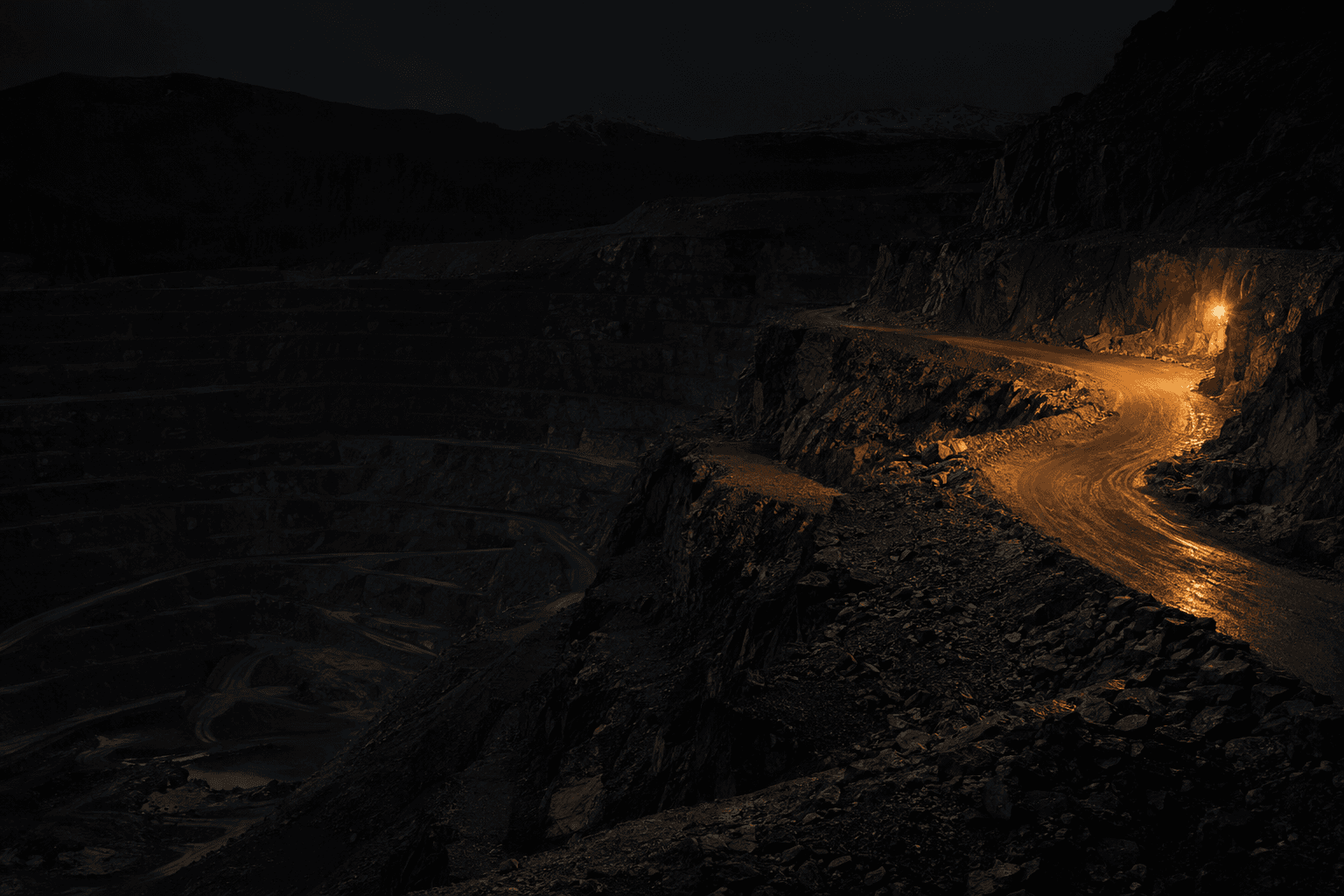
The mine is in Tanzania's Mara region and draws ore from the underground Gokona deposit and the open pit Nyabirama deposit, according to Barrick's mine profile.
The statement does not identify the renewed licence numbers, list their boundaries, state their effective dates or reproduce their conditions. We have not seen the renewed instruments themselves, so we cannot tell you whether either deposit received different terms or whether the renewal changed any fiscal obligation.
The duration is confirmed by Barrick's dated PDF. The precise rights and obligations within that duration remain to be checked against the licences.
For an owner of Barrick shares, longer permission gives the operator more room to plan. The value of the mine still depends on recoverable ore, production costs and how the resulting cash is shared.
There is no new reserve estimate, mine plan or capital budget in the October 5 renewal statement. It contains no forecast of annual North Mara production for the newly granted years. Treating the 15-year term as 15 years of today's output would add a forecast Barrick did not make.
Barrick projects fewer attributable ounces in 2026 than it produced in 2025, even as the legal horizon has lengthened.
The Ounces Have Their Own Clock
Barrick's mine profile gives its 2026 North Mara output outlook as 200,000 to 230,000 attributable ounces. The profile says these are based on Barrick's 84% share of production.
That range sits below the 249,000 attributable ounces reported for 2025. It is a company forecast, rather than a result, and the renewal statement did not revise it.
We would read the new licence as permission to keep trying to improve that path. A document granting time cannot itself raise the ore grade, repair equipment or reduce the cost of turning rock into gold.
In Barrick's August 10 second-quarter results, the company said lower grades processed at North Mara were one contributor to a rise in gold cost of sales across its operations from the comparable quarter a year earlier. Barrick also named lower grades at other mines, higher fuel costs and higher royalties.
That disclosure does not isolate how much North Mara added to the group cost increase. It does tell us that grade at this very mine was already affecting reported costs before the licences were renewed.
Barrick's North Mara profile forecasts 2026 all-in sustaining costs of $1,520 to $1,680 per attributable ounce. This is a mine-level outlook for a non-GAAP measure, not a promise of the price the company will receive or the free cash it will distribute.
If grade improves and production lands toward the top of guidance, North Mara can make better use of the longer permit horizon. If grade disappoints or costs press above guidance, the added years may carry less value than the term suggests.
We cannot multiply 2025's output by 15, because Barrick has published no production schedule for the renewed period in the October 5 statement. The next reserve and mine-plan disclosures will have to supply that missing bridge.
Who Gets the Benefit
The renewal statement also describes how North Mara sits inside Barrick's Tanzanian partnership.
Barrick says it and Tanzania formed Twiga Minerals in 2019 to operate North Mara and Bulyanhulu together. The government holds a 16% interest in each mine, and the partners split the economic benefits equally, according to Barrick's statement.
Those are two different descriptions of the partnership. Barrick's mine profile reports North Mara ounces on an 84% attributable basis, while the release describes an equal split of economic benefits. Neither statement provides a mine-level cash waterfall for the renewed years.
We would therefore hesitate to turn every attributable ounce into an assumed 84% share of cash for Barrick shareholders. Equally shared economic benefits do not, by themselves, tell us the exact dividend or cash distribution Barrick will receive.
The company's October 5 statement says Barrick put about $1.2 billion into Tanzania's economy in 2025 through taxes, royalties, salaries, dividends and local procurement. That figure gathers payments to different recipients. It is not North Mara's free cash flow or a payout to Barrick shareholders.
Barrick also says about 96% of its roughly 3,000 workers in the country are Tanzanian nationals. Those employment and spending figures help explain why the government and communities have a continuing stake in the mine's operation, but they cannot price the renewal for you.
For owners of B in New York or ABX in Toronto, the gain is a longer opportunity to earn from North Mara. The unresolved question is how much of that opportunity reaches the parent after production costs, spending and the partnership's economic split.
Our earlier Barrick's AI Test Starts in Nevada followed a very different part of the company's portfolio. North Mara now asks us to measure an existing mine by the terms of its operating permission and by the ounces and cash it actually reports.
What We Would Own and Watch
If you already own Barrick, we would hold the position through the next North Mara operating update, with one condition: the mine's reported production and costs have to justify the longer horizon. The October 5 notice alone is too thin to put a new cash value on the asset.
For a new buyer of B or ABX, our preference is to wait for either the licence instruments or a company mine plan that spells out what the extra term supports. The upside is more time to recover profitable gold. The risk is paying today for years of production that have not been scheduled.
By October 31, 2026, we will look to Barrick and Tanzania's Ministry of Minerals for the renewed licence numbers, boundaries, effective dates and conditions. If they appear, we can test exactly which rights were extended. If they do not, the release remains the only document we can cite for the term.
When Barrick publishes its full-year 2026 North Mara result, we can compare it with its 200,000 to 230,000-ounce production guide. Its $1,520 to $1,680-per-ounce all-in sustaining cost guide sets a separate test. Output below the production range or costs above the cost range would weaken the case for paying more on the renewal. A result within both ranges would support holding, while the missing licence terms and mine plan would still govern any new purchase.
A permit can give a mine more years.
Only the mine can fill them with gold.
Seek the truth and be prepared,
Equedia
Sources
- Barrick Mining Corporation, North Mara mining licence renewal, October 5, 2026
- Barrick Mining Corporation, North Mara mine profile and 2026 outlook, accessed October 5, 2026
- Barrick Mining Corporation, Second-quarter 2026 results, August 10, 2026
- Tanzania Ministry of Minerals, Official ministry website, accessed October 5, 2026
- The Equedia Letter, Barrick's AI Test Starts in Nevada
Disclaimer: We own gold and gold stocks. This letter is for informational and educational purposes only and does not constitute investment advice. Past predictions and performance are not indicative of future results. Please see our full terms of use and disclaimer at equedia.com.